 Image 1 of 4
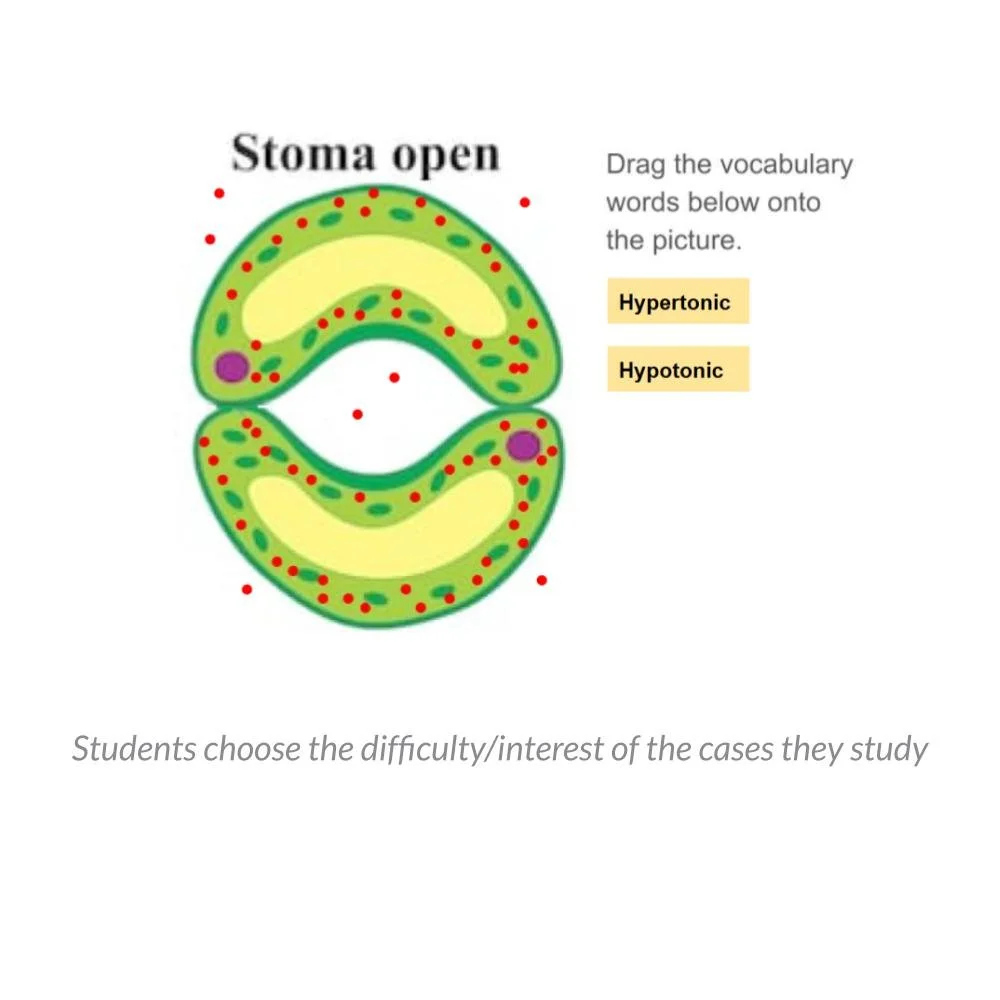 Image 2 of 4
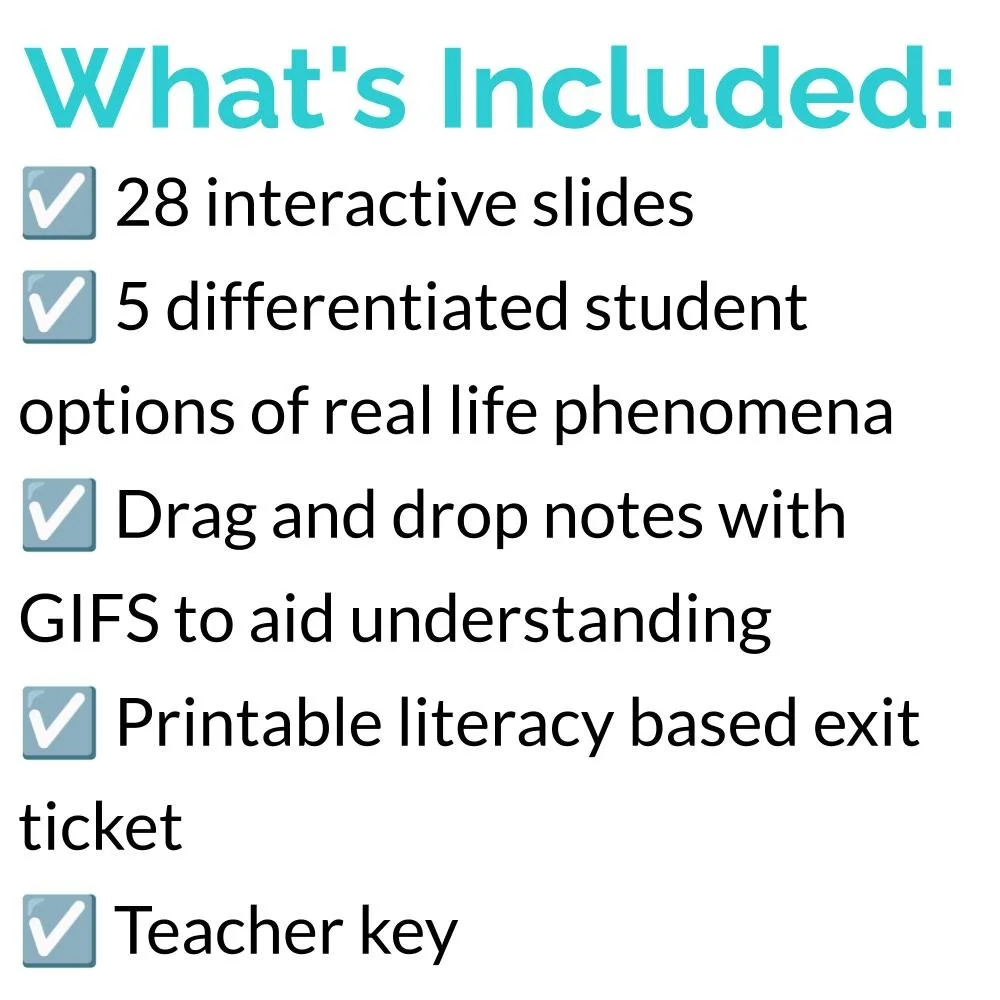 Image 3 of 4
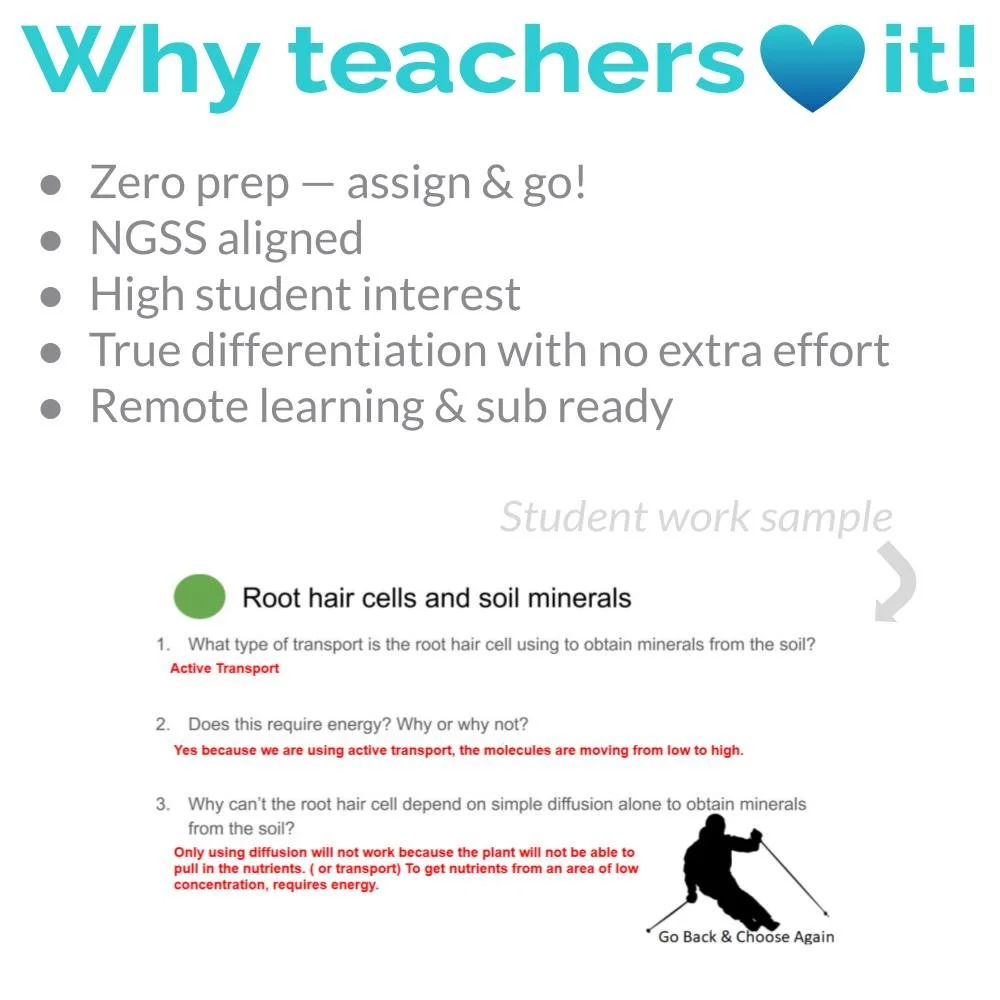 Image 4 of 4
A Digital Slides Lesson with Diffusion vs Osmosis Review, Protein Pumps, and Student Choice Case Studies.
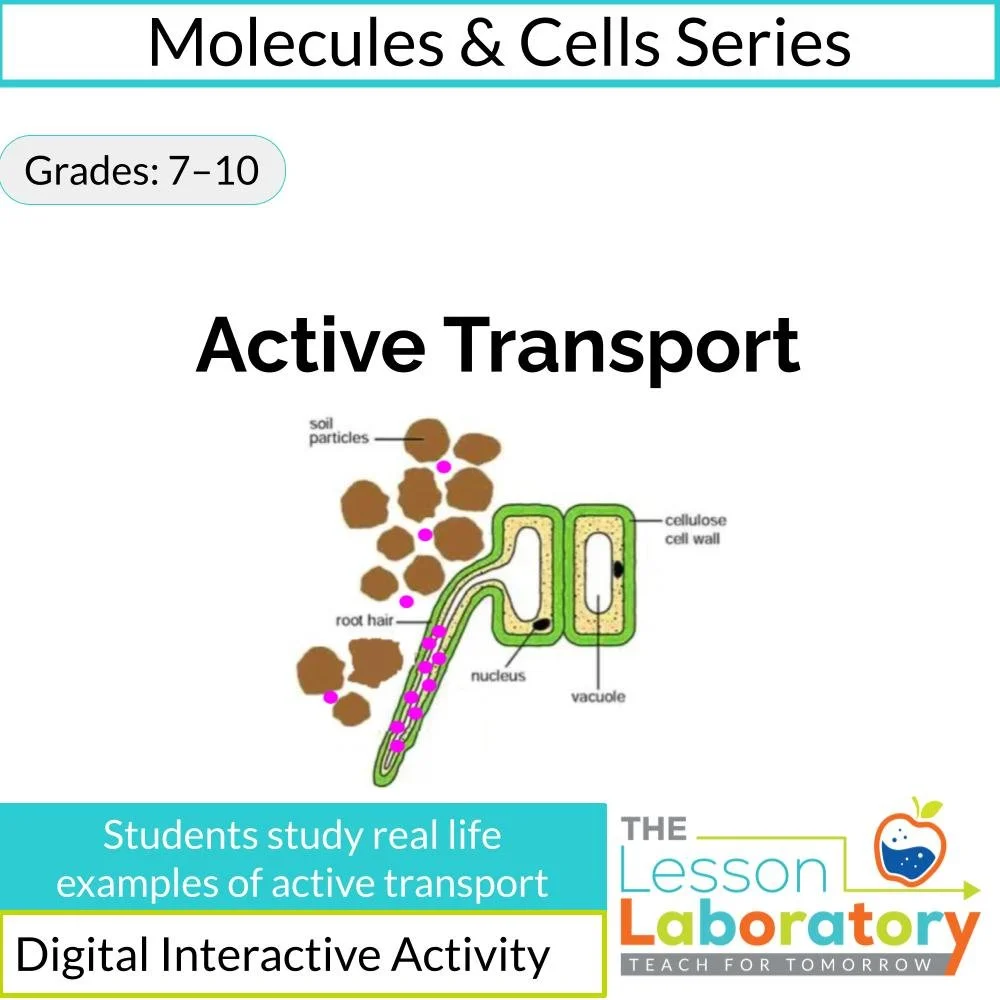
This digital biology lesson builds student understanding of active transport by connecting molecular movement, energy use, and real-world cellular examples. It is designed for students who already have background knowledge of the cell membrane and passive transport (diffusion, facilitated diffusion, and osmosis).
The lesson emphasizes conceptual clarity through visual models, structured comparison, and differentiated application tasks.
Students begin by reviewing how substances move across the cell membrane and then examine how concentration gradients relate to energy use. Gradients are modeled visually to help students distinguish between movement that occurs naturally and movement that requires cellular energy.
Students complete a comparison task that contrasts:
• diffusion
• facilitated diffusion
• osmosis
• active transport
This table reinforces similarities and differences among transport mechanisms.
Next, students select from five real-world examples of active transport, organized by difficulty level. They analyze multiple examples to determine:
• what substance is being moved
• which direction it is moving relative to the gradient
• why energy is required
• how the transport supports cell function
• Cell membrane transport
• Concentration gradients
• Energy use in cellular processes
• Passive vs. active transport
• Diffusion, facilitated diffusion, and osmosis
• Structure–function relationships in cells
• Builds conceptual understanding of energy and gradients
• Connects abstract transport mechanisms to real biological systems
• Includes differentiated application choices
• Supports visual and analytical learners
• Works well for guided instruction or independent practice
• Minimal prep required
This lesson is delivered as a digital interactive lesson (Google Slides compatible) with built-in student tasks.
A teacher key is included.
• Middle school life science
• High school biology
• Cell transport units
• Lessons on diffusion and active transport
• Classes developing molecular reasoning
To preview this product, click here
NGSS Alignment (Middle School):
MS-LS1-2
NGSS Alignment (High School):
HS-LS1-2
Science & Engineering Practices (SEPs):
Developing and Using Models; Constructing Explanations; Analyzing and Interpreting Data
Crosscutting Concepts (CCCs):
Structure and Function; Energy and Matter; Systems and System Models
Common Core (Literacy in Science):
RST.6-8.7, RST.9-10.7
WHST.6-8.2, WHST.9-10.2
Bundle Upgrade Policy
This lesson is included in one or more bundles. To support flexible purchasing and long-term use of our curriculum, Lesson Laboratory offers a bundle upgrade policy.
If you purchase this lesson and decide at a later date that you would like to upgrade to a bundle, you may request a store credit equal to the total amount paid for duplicate items.
To request an upgrade credit, please email thelessonlaboratory@gmail.com and include:
Your username
The order numbers for both the original purchase(s) and the bundle
The names of the duplicate resources
Requests must be submitted within 30 days of the bundle purchase. Credits are issued as store credit for future Lesson Laboratory purchases and are not provided as cash refunds.
This policy applies only to purchases of resources that are later included in a Lesson Laboratory bundle and is limited to one adjustment per upgrade pathway.
A Digital Slides Lesson with Diffusion vs Osmosis Review, Protein Pumps, and Student Choice Case Studies.
This digital biology lesson builds student understanding of active transport by connecting molecular movement, energy use, and real-world cellular examples. It is designed for students who already have background knowledge of the cell membrane and passive transport (diffusion, facilitated diffusion, and osmosis).
The lesson emphasizes conceptual clarity through visual models, structured comparison, and differentiated application tasks.
Students begin by reviewing how substances move across the cell membrane and then examine how concentration gradients relate to energy use. Gradients are modeled visually to help students distinguish between movement that occurs naturally and movement that requires cellular energy.
Students complete a comparison task that contrasts:
• diffusion
• facilitated diffusion
• osmosis
• active transport
This table reinforces similarities and differences among transport mechanisms.
Next, students select from five real-world examples of active transport, organized by difficulty level. They analyze multiple examples to determine:
• what substance is being moved
• which direction it is moving relative to the gradient
• why energy is required
• how the transport supports cell function
• Cell membrane transport
• Concentration gradients
• Energy use in cellular processes
• Passive vs. active transport
• Diffusion, facilitated diffusion, and osmosis
• Structure–function relationships in cells
• Builds conceptual understanding of energy and gradients
• Connects abstract transport mechanisms to real biological systems
• Includes differentiated application choices
• Supports visual and analytical learners
• Works well for guided instruction or independent practice
• Minimal prep required
This lesson is delivered as a digital interactive lesson (Google Slides compatible) with built-in student tasks.
A teacher key is included.
• Middle school life science
• High school biology
• Cell transport units
• Lessons on diffusion and active transport
• Classes developing molecular reasoning
To preview this product, click here
NGSS Alignment (Middle School):
MS-LS1-2
NGSS Alignment (High School):
HS-LS1-2
Science & Engineering Practices (SEPs):
Developing and Using Models; Constructing Explanations; Analyzing and Interpreting Data
Crosscutting Concepts (CCCs):
Structure and Function; Energy and Matter; Systems and System Models
Common Core (Literacy in Science):
RST.6-8.7, RST.9-10.7
WHST.6-8.2, WHST.9-10.2
Bundle Upgrade Policy
This lesson is included in one or more bundles. To support flexible purchasing and long-term use of our curriculum, Lesson Laboratory offers a bundle upgrade policy.
If you purchase this lesson and decide at a later date that you would like to upgrade to a bundle, you may request a store credit equal to the total amount paid for duplicate items.
To request an upgrade credit, please email thelessonlaboratory@gmail.com and include:
Your username
The order numbers for both the original purchase(s) and the bundle
The names of the duplicate resources
Requests must be submitted within 30 days of the bundle purchase. Credits are issued as store credit for future Lesson Laboratory purchases and are not provided as cash refunds.
This policy applies only to purchases of resources that are later included in a Lesson Laboratory bundle and is limited to one adjustment per upgrade pathway.