 Image 1 of 4
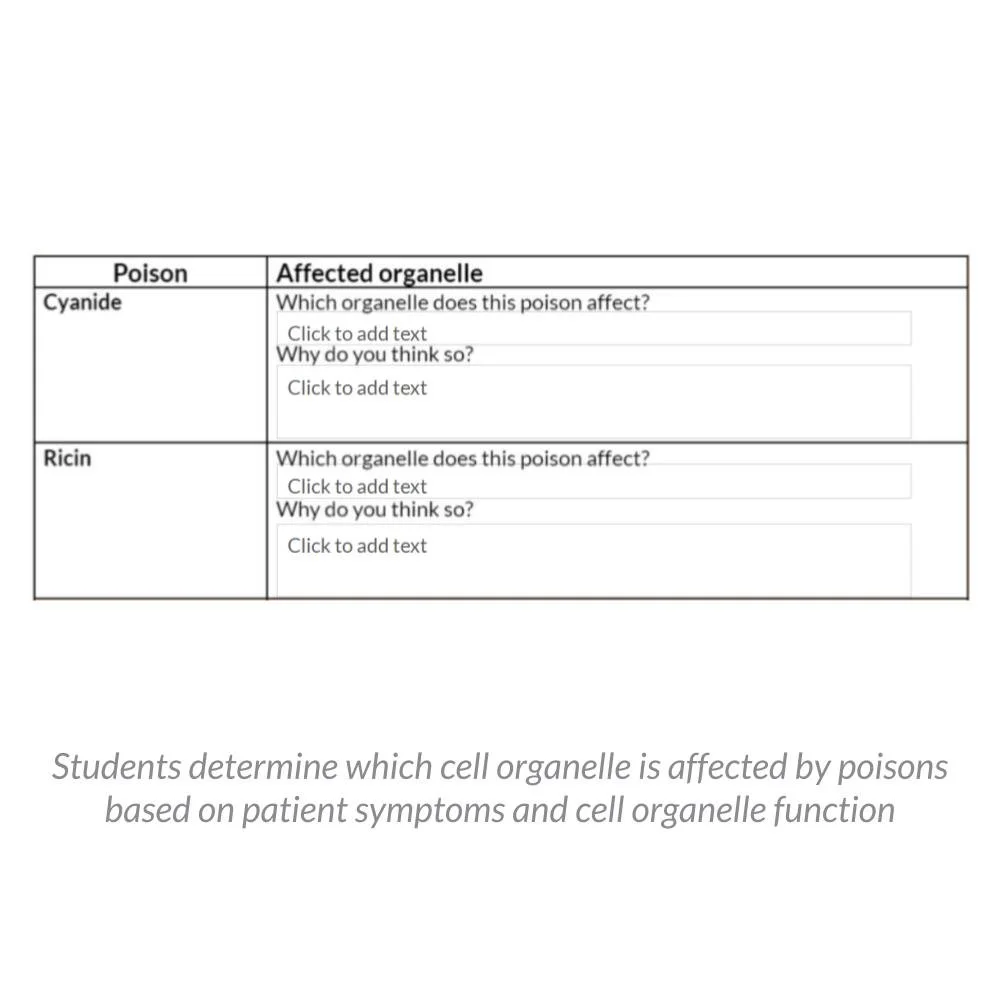 Image 2 of 4
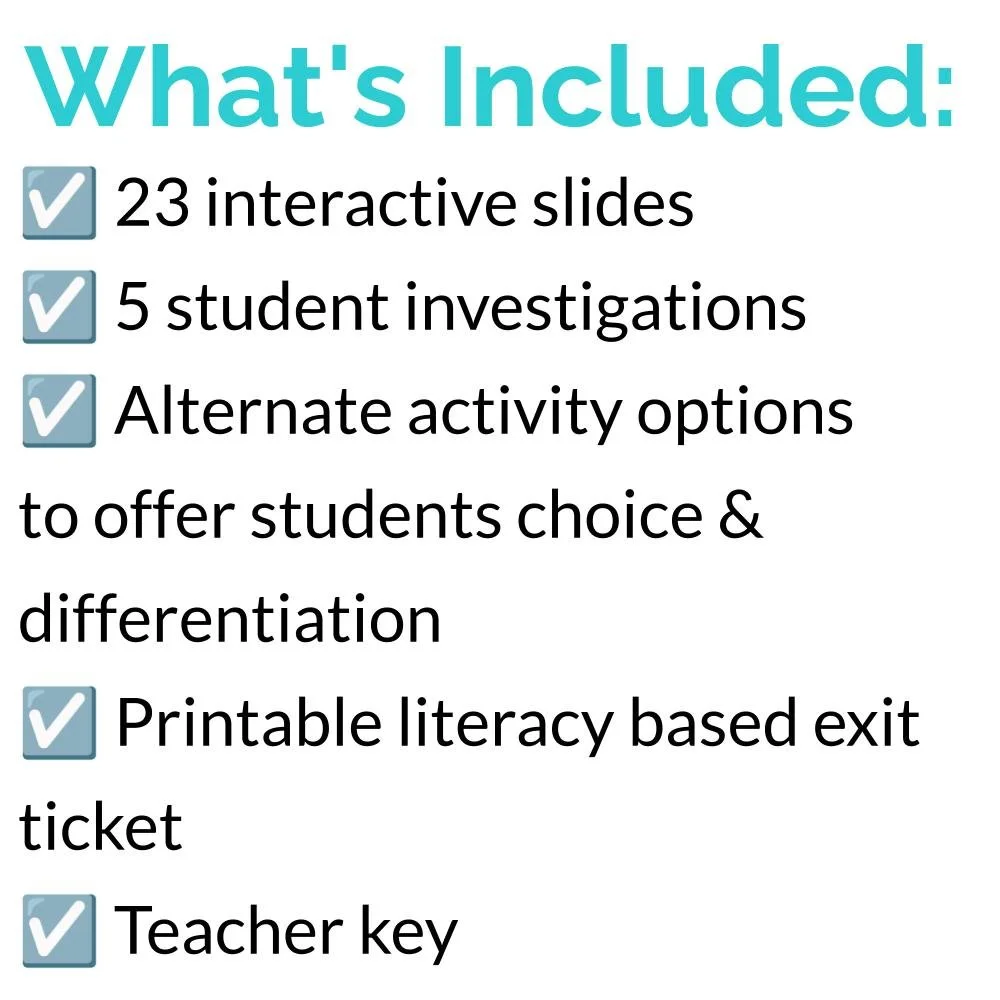 Image 3 of 4
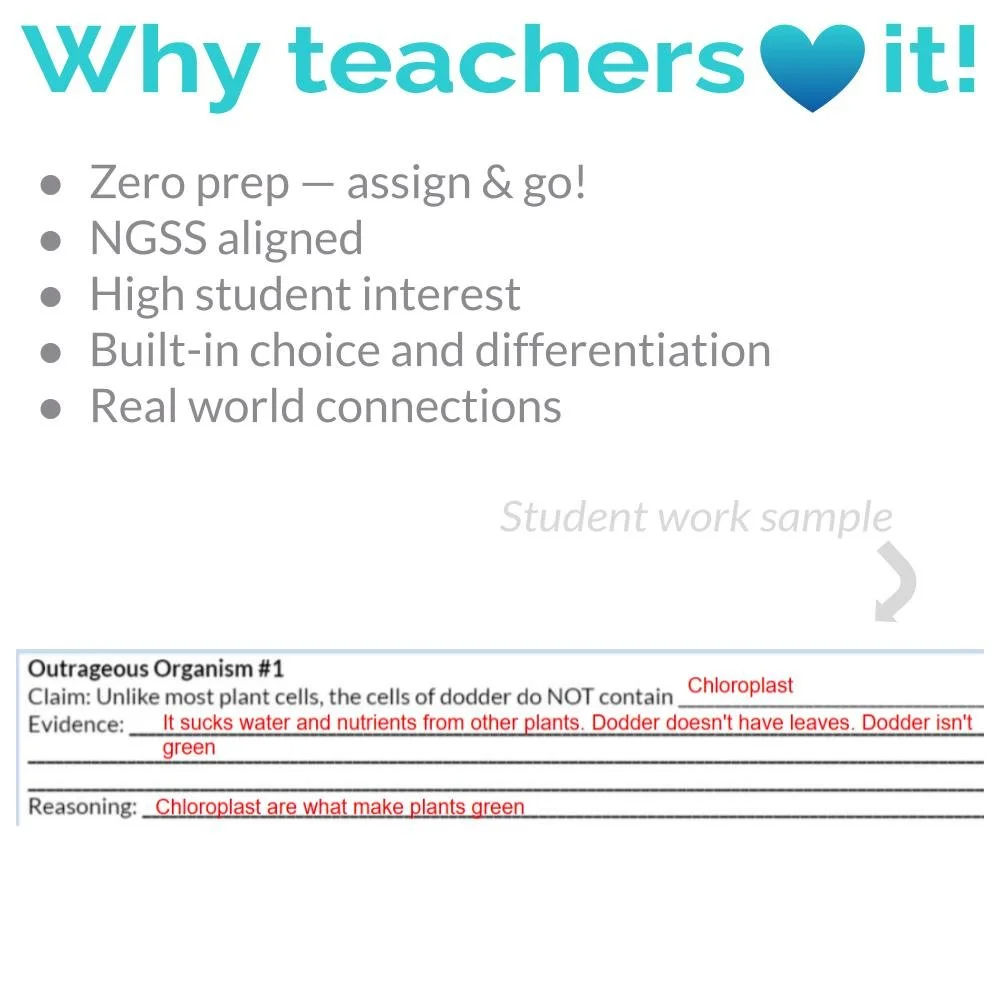 Image 4 of 4
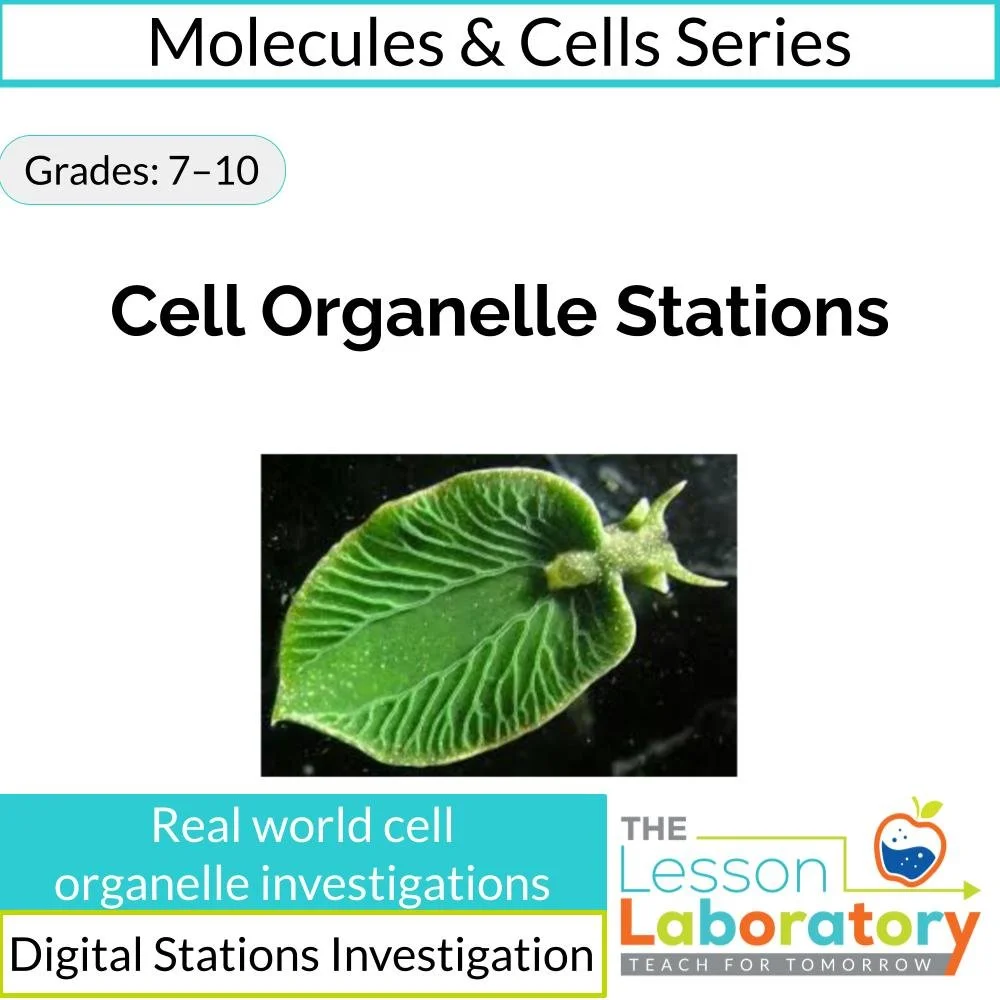
Students rotate through interactive stations to investigate organelle functions using real diseases, poisons, organisms, and scientific evidence.
This digital stations lesson introduces cell organelles through a set of structured, problem-based activities that move students beyond memorization and toward conceptual understanding. Students encounter organelles in multiple contexts—comparison, malfunction, analogy, adaptation, and scientific discovery—so they learn not just what organelles are, but why they matter.
Rather than relying on notes alone, this lesson uses stations to require students to apply organelle knowledge in unfamiliar situations, strengthening transfer and long-term understanding.
Students rotate through five stations, each designed to highlight organelle structure and function in a different way:
Station 1: Cell Type Comparison
Students compare viruses, prokaryotes, and eukaryotes to identify which structures are present or absent and what that means for cellular function.
Station 2: Organelle Malfunction
Using a reference sheet, students analyze either genetic diseases or poisons to determine which organelles are affected and how those malfunctions produce specific symptoms.
Station 3: Organelle Analogies
Students complete an analogy-based memory activity that matches organelles to functional equivalents, reinforcing purpose and role rather than location alone.
Station 4: Unusual Organisms
Students examine atypical organisms (such as parasitic plants) and reason about how their cellular structures may differ from closely related organisms.
Station 5: Scientific Discovery
Students explore historical experiments that revealed organelle function and match each experiment to the organelle it helped explain.
• Organelle structure and function
• Comparison of cell types
• Cause-and-effect reasoning
• Application of biology concepts in new contexts
• Scientific reasoning and evidence
• Vocabulary in meaningful use
• Moves students beyond memorization
• Encourages reasoning and discussion
• Works well for stations or small groups
• Supports diverse learners through varied task types
• Integrates reading, analysis, and application
• Minimal prep required
This resource is a digital stations lesson (Google Slides compatible).
Includes:
✔ Five complete station activities
✔ Student recording slides
✔ Reference materials
✔ Teacher answer key
✔ Printable literacy-based exit ticket
• Middle school life science
• High school biology
• Cell structure and function units
• Review or enrichment
• Inquiry-based instruction
NGSS Alignment (High School):
HS-LS1-2
HS-LS1-3
NGSS Alignment (Middle School):
MS-LS1-2
Science & Engineering Practices (SEPs):
Developing and Using Models; Analyzing and Interpreting Data; Engaging in Argument from Evidence
Crosscutting Concepts (CCCs):
Systems and System Models; Structure and Function; Cause and Effect
Common Core (Literacy in Science):
RST.9-10.4
RST.9-10.7
WHST.9-10.2
Bundle Upgrade Policy
This lesson is included in one or more bundles. To support flexible purchasing and long-term use of our curriculum, Lesson Laboratory offers a bundle upgrade policy.
If you purchase this lesson and decide at a later date that you would like to upgrade to a bundle, you may request a store credit equal to the total amount paid for duplicate items.
To request an upgrade credit, please email thelessonlaboratory@gmail.com and include:
Your username
The order numbers for both the original purchase(s) and the bundle
The names of the duplicate resources
Requests must be submitted within 30 days of the bundle purchase. Credits are issued as store credit for future Lesson Laboratory purchases and are not provided as cash refunds.
This policy applies only to purchases of resources that are later included in a Lesson Laboratory bundle and is limited to one adjustment per upgrade pathway.
Students rotate through interactive stations to investigate organelle functions using real diseases, poisons, organisms, and scientific evidence.
This digital stations lesson introduces cell organelles through a set of structured, problem-based activities that move students beyond memorization and toward conceptual understanding. Students encounter organelles in multiple contexts—comparison, malfunction, analogy, adaptation, and scientific discovery—so they learn not just what organelles are, but why they matter.
Rather than relying on notes alone, this lesson uses stations to require students to apply organelle knowledge in unfamiliar situations, strengthening transfer and long-term understanding.
Students rotate through five stations, each designed to highlight organelle structure and function in a different way:
Station 1: Cell Type Comparison
Students compare viruses, prokaryotes, and eukaryotes to identify which structures are present or absent and what that means for cellular function.
Station 2: Organelle Malfunction
Using a reference sheet, students analyze either genetic diseases or poisons to determine which organelles are affected and how those malfunctions produce specific symptoms.
Station 3: Organelle Analogies
Students complete an analogy-based memory activity that matches organelles to functional equivalents, reinforcing purpose and role rather than location alone.
Station 4: Unusual Organisms
Students examine atypical organisms (such as parasitic plants) and reason about how their cellular structures may differ from closely related organisms.
Station 5: Scientific Discovery
Students explore historical experiments that revealed organelle function and match each experiment to the organelle it helped explain.
• Organelle structure and function
• Comparison of cell types
• Cause-and-effect reasoning
• Application of biology concepts in new contexts
• Scientific reasoning and evidence
• Vocabulary in meaningful use
• Moves students beyond memorization
• Encourages reasoning and discussion
• Works well for stations or small groups
• Supports diverse learners through varied task types
• Integrates reading, analysis, and application
• Minimal prep required
This resource is a digital stations lesson (Google Slides compatible).
Includes:
✔ Five complete station activities
✔ Student recording slides
✔ Reference materials
✔ Teacher answer key
✔ Printable literacy-based exit ticket
• Middle school life science
• High school biology
• Cell structure and function units
• Review or enrichment
• Inquiry-based instruction
NGSS Alignment (High School):
HS-LS1-2
HS-LS1-3
NGSS Alignment (Middle School):
MS-LS1-2
Science & Engineering Practices (SEPs):
Developing and Using Models; Analyzing and Interpreting Data; Engaging in Argument from Evidence
Crosscutting Concepts (CCCs):
Systems and System Models; Structure and Function; Cause and Effect
Common Core (Literacy in Science):
RST.9-10.4
RST.9-10.7
WHST.9-10.2
Bundle Upgrade Policy
This lesson is included in one or more bundles. To support flexible purchasing and long-term use of our curriculum, Lesson Laboratory offers a bundle upgrade policy.
If you purchase this lesson and decide at a later date that you would like to upgrade to a bundle, you may request a store credit equal to the total amount paid for duplicate items.
To request an upgrade credit, please email thelessonlaboratory@gmail.com and include:
Your username
The order numbers for both the original purchase(s) and the bundle
The names of the duplicate resources
Requests must be submitted within 30 days of the bundle purchase. Credits are issued as store credit for future Lesson Laboratory purchases and are not provided as cash refunds.
This policy applies only to purchases of resources that are later included in a Lesson Laboratory bundle and is limited to one adjustment per upgrade pathway.