 Image 1 of 4
 Image 2 of 4
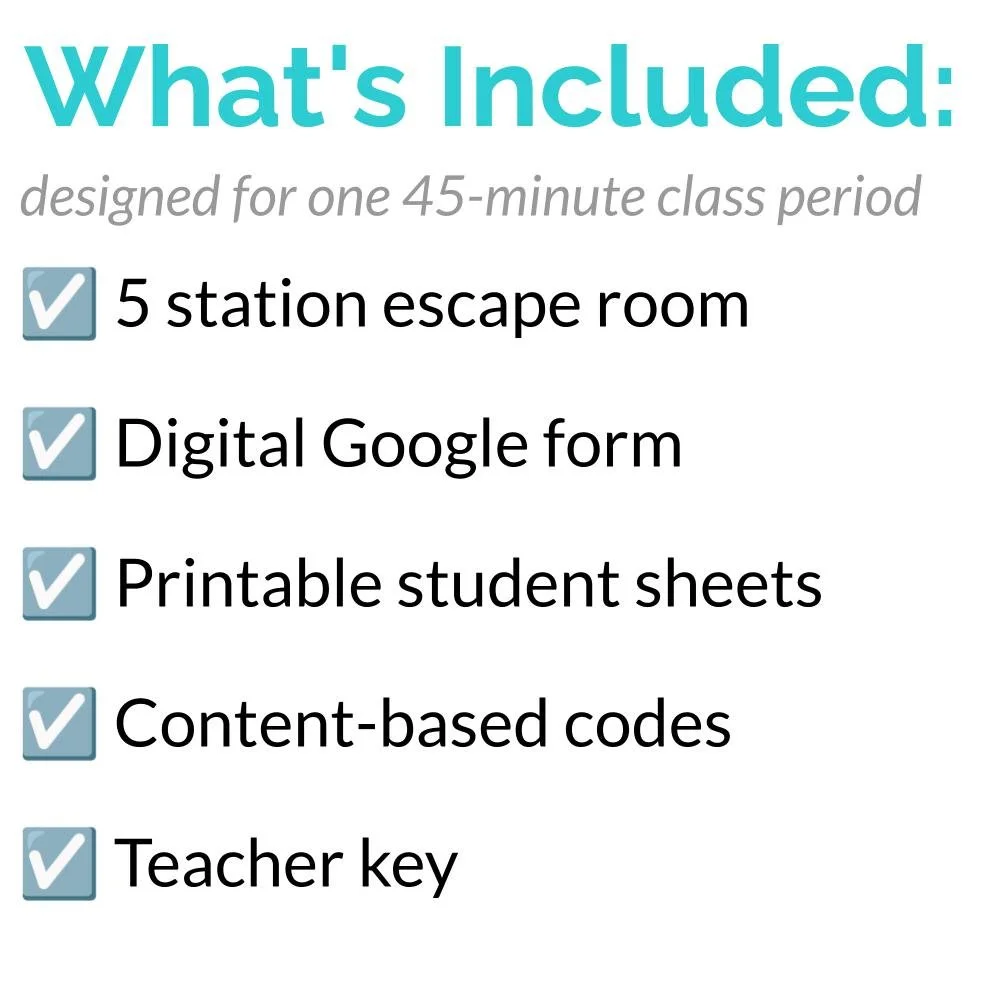 Image 3 of 4
 Image 4 of 4
Intro science skills escape room (measurement + graphing + scientific method)
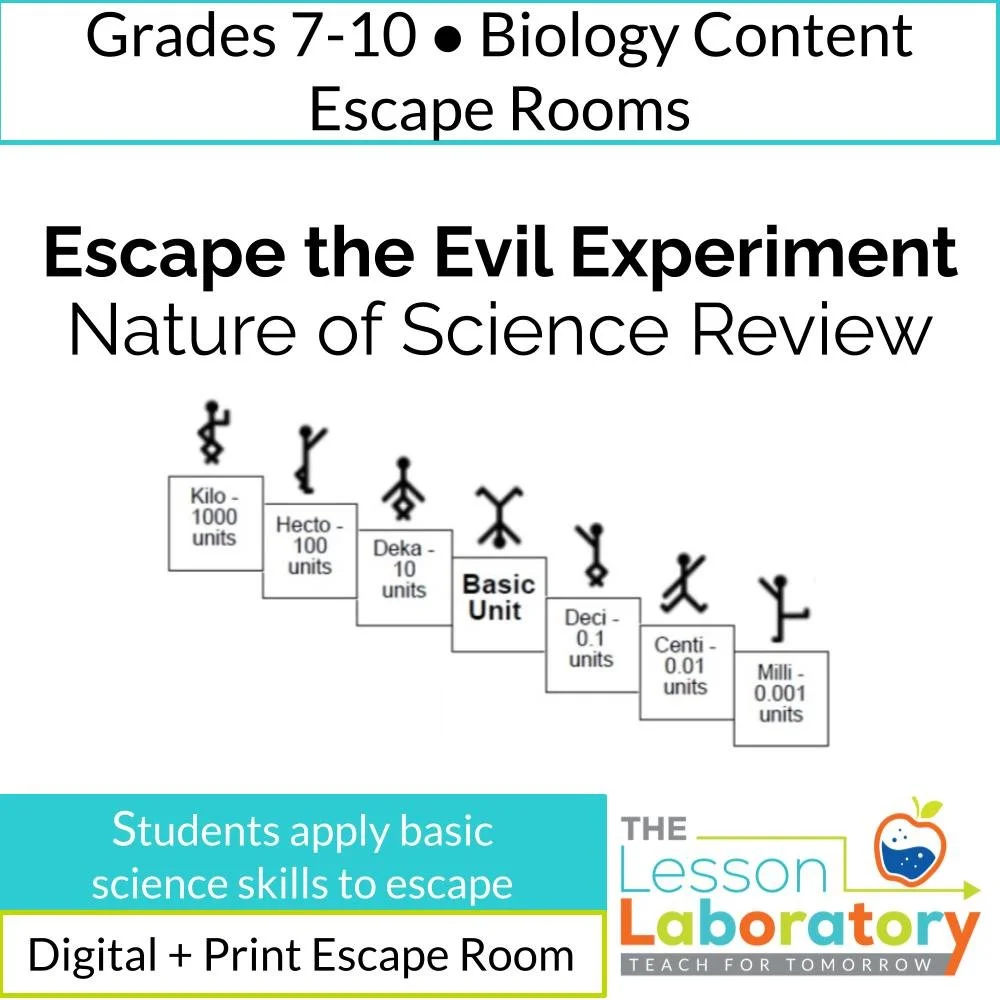
This digital escape-room style activity provides cumulative review of core science skills and scientific method concepts through a sequence of structured problem-solving stations. Students apply previously learned skills to unlock codes by interpreting data, using measurement tools, and analyzing experimental structure.
Students work through five stations that target major introductory science skills:
Identifying laboratory safety rules and equipment
Performing metric system conversions
Applying measurement techniques
Using the scientific method to analyze investigations
Interpreting and completing graphs
At each station, students use their answers to generate part of an escape code. Codes must be combined and formatted correctly to complete the challenge, reinforcing both content accuracy and procedural precision.
This activity is designed to:
assess student understanding of foundational science skills
require application rather than recall
integrate multiple introductory science competencies
function as an end-of-unit review or synthesis task
A teacher key is included to support efficient implementation. This lesson works well as a review activity at the end of an introduction to science unit.
To preview this escape room, click here.
NGSS Alignment (High School):
None directly aligned (activity supports NGSS Science & Engineering Practices)
NGSS Alignment (Middle School):
None directly aligned (activity supports NGSS Science & Engineering Practices)
Science & Engineering Practices (SEPs):
Planning and Carrying Out Investigations; Analyzing and Interpreting Data; Using Mathematics and Computational Thinking; Obtaining, Evaluating, and Communicating Information
Crosscutting Concepts (CCCs):
Patterns; Cause and Effect; Scale, Proportion, and Quantity
Common Core (Literacy in Science):
RST.9-10.3
RST.9-10.7
Common Core (Mathematics):
6.RP.A.3
Bundle Upgrade Policy
This lesson is included in one or more bundles. To support flexible purchasing and long-term use of our curriculum, Lesson Laboratory offers a bundle upgrade policy.
If you purchase this lesson and decide at a later date that you would like to upgrade to a bundle, you may request a store credit equal to the total amount paid for duplicate items.
To request an upgrade credit, please email thelessonlaboratory@gmail.com and include:
Your username
The order numbers for both the original purchase(s) and the bundle
The names of the duplicate resources
Requests must be submitted within 30 days of the bundle purchase. Credits are issued as store credit for future Lesson Laboratory purchases and are not provided as cash refunds.
This policy applies only to purchases of resources that are later included in a Lesson Laboratory bundle and is limited to one adjustment per upgrade pathway.
Intro science skills escape room (measurement + graphing + scientific method)
This digital escape-room style activity provides cumulative review of core science skills and scientific method concepts through a sequence of structured problem-solving stations. Students apply previously learned skills to unlock codes by interpreting data, using measurement tools, and analyzing experimental structure.
Students work through five stations that target major introductory science skills:
Identifying laboratory safety rules and equipment
Performing metric system conversions
Applying measurement techniques
Using the scientific method to analyze investigations
Interpreting and completing graphs
At each station, students use their answers to generate part of an escape code. Codes must be combined and formatted correctly to complete the challenge, reinforcing both content accuracy and procedural precision.
This activity is designed to:
assess student understanding of foundational science skills
require application rather than recall
integrate multiple introductory science competencies
function as an end-of-unit review or synthesis task
A teacher key is included to support efficient implementation. This lesson works well as a review activity at the end of an introduction to science unit.
To preview this escape room, click here.
NGSS Alignment (High School):
None directly aligned (activity supports NGSS Science & Engineering Practices)
NGSS Alignment (Middle School):
None directly aligned (activity supports NGSS Science & Engineering Practices)
Science & Engineering Practices (SEPs):
Planning and Carrying Out Investigations; Analyzing and Interpreting Data; Using Mathematics and Computational Thinking; Obtaining, Evaluating, and Communicating Information
Crosscutting Concepts (CCCs):
Patterns; Cause and Effect; Scale, Proportion, and Quantity
Common Core (Literacy in Science):
RST.9-10.3
RST.9-10.7
Common Core (Mathematics):
6.RP.A.3
Bundle Upgrade Policy
This lesson is included in one or more bundles. To support flexible purchasing and long-term use of our curriculum, Lesson Laboratory offers a bundle upgrade policy.
If you purchase this lesson and decide at a later date that you would like to upgrade to a bundle, you may request a store credit equal to the total amount paid for duplicate items.
To request an upgrade credit, please email thelessonlaboratory@gmail.com and include:
Your username
The order numbers for both the original purchase(s) and the bundle
The names of the duplicate resources
Requests must be submitted within 30 days of the bundle purchase. Credits are issued as store credit for future Lesson Laboratory purchases and are not provided as cash refunds.
This policy applies only to purchases of resources that are later included in a Lesson Laboratory bundle and is limited to one adjustment per upgrade pathway.